
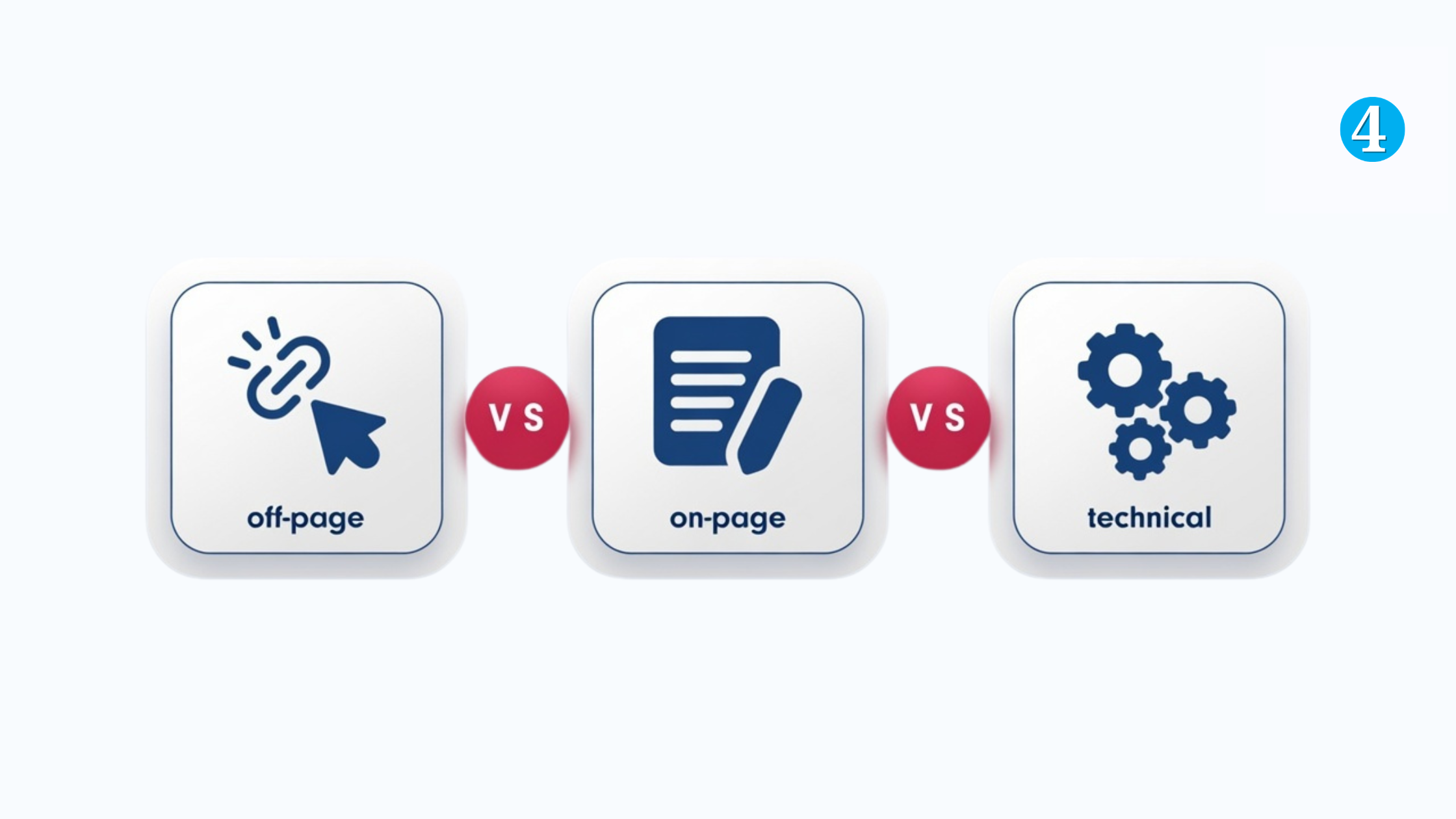
Most SEO explanations treat these three as a checklist, not a chain. They list what each type covers, declare them all important, and move on. That misses the point.
Search Engine Optimization (SEO) is the practice of optimizing your website to increase its visibility on search engines like Google. Its three primary pillars—On-Page SEO, Off-Page SEO, and Technical SEO—each serve a distinct purpose. However, they are most effective when they work together as a connected strategy rather than as isolated tactics.
In this blog, we’ll explore what each type of SEO involves, why it matters, and how all three work together to improve your website’s visibility, rankings, and overall performance.
What is Technical SEO?
A page with a brilliant title tag and valuable content won’t rank if Googlebot can’t crawl or index it.
Start here—not because Technical SEO is the most important, but because nothing else works without it.
Technical SEO focuses on the backend foundation of your website, ensuring search engines can crawl, index, and interpret your content efficiently. It also improves key aspects such as site speed, security, and overall accessibility, creating a better experience for both search engines and users.
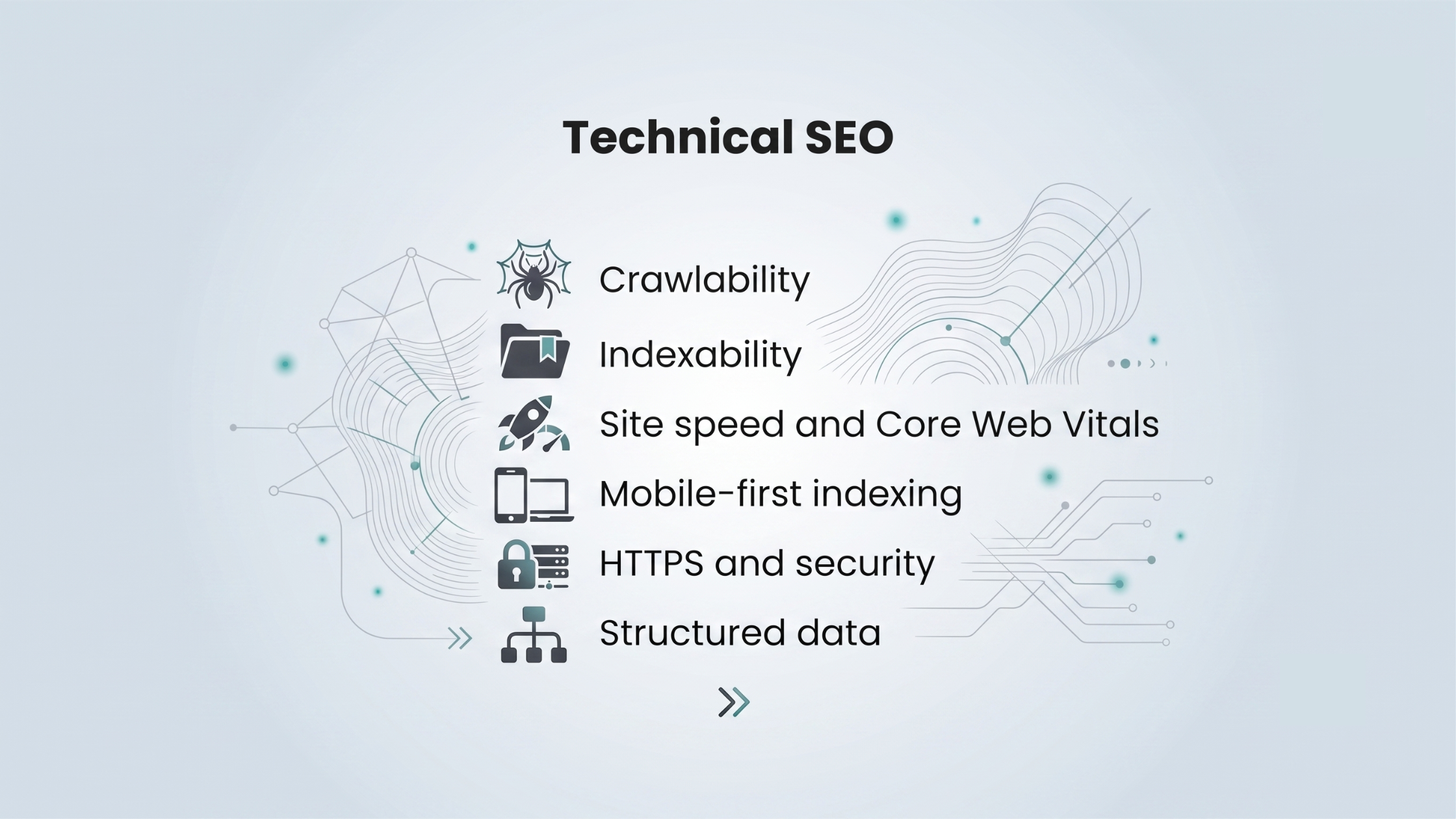
What’s Included in Technical SEO?
- Crawlability: Ensure search engines can access and crawl your pages efficiently by using XML sitemaps and optimizing your robots.txt file to help them discover your content.
- Indexability: Ensure search engines can properly analyze, index, and understand your pages after crawling them by correctly using `noindex` tags, canonical tags, and managing duplicate content.
- Site speed and Core Web Vitals: Improve page speed to enhance both user experience and search engine rankings. This includes optimizing Core Web Vitals such as Largest Contentful Paint (LCP), Interaction to Next Paint (INP), and Cumulative Layout Shift (CLS), which measure loading performance, responsiveness, and visual stability.
- Mobile-first indexing: Ensure your website is mobile-friendly and responsive. Since Google uses mobile-first indexing, the mobile version of your site is the primary version used for crawling and ranking.
- HTTPS and security: Secure your website with HTTPS. Google uses HTTPS as a ranking signal, making SSL/TLS encryption an important part of technical SEO.
- Structured data: Use schema markup to help search engines understand your page type and content, increasing the chances of rich snippets and improved visibility in search results.
Why This Matters: You publish a well-written guide on technical SEO, but robots.txt is accidentally blocking the /blog/ directory. Google never crawls it, it never ranks, and you have no idea why. That’s a technical SEO failure, not a content one.
Full guide: Technical SEO A Complete Guide to Best Practices
What is On-Page SEO?
On-page SEO refers to the optimizations you make directly on your pages to help search engines understand the content and improve rankings. The goal is alignment: your page’s content and structure should match what the searcher actually wants (search intent) and how Google’s systems interpret relevance.
This includes the optimization that happens directly on the page itself—your words, HTML structure, internal links, and images. If technical SEO answers “can Google read this?”, on-page SEO answers “does Google understand what this page means?”
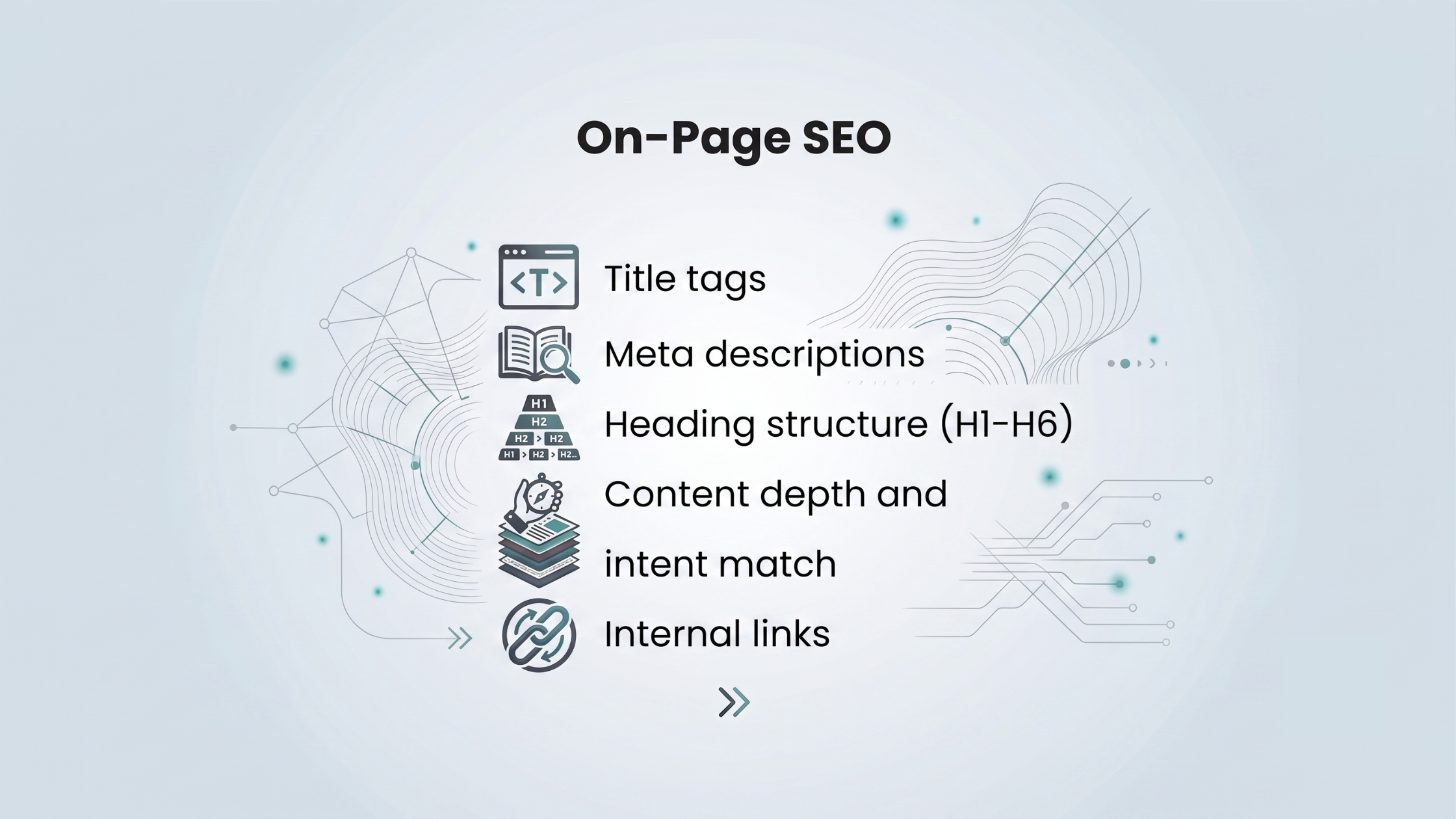
What’s Included in On-Page SEO?
- Title tags: the strongest signals for both search engines and users. Craft concise and clear titles, ensure the focus keyword is placed within the first few words, and keep the character count between 55–70 characters.
- Meta descriptions: not a direct ranking factor, but they provide a brief summary of a page’s content. Write unique and compelling descriptions between 150–160 characters, incorporating keywords to improve click-through rates.
- Heading structure (H1-H6): help both Google and readers structure your content hierarchically, improving readability for users and helping search engines understand the organization of your information.
- Content depth and intent match: Content is king because users searching for a keyword expect relevant and valuable information. Google’s algorithm is designed to reward content that answers users’ questions, solves their problems, and matches search intent.
- Internal links: help search engines understand your site’s structure. Use keyword-rich anchor text and link to other relevant pages on your site to improve navigation.
Why This Matters: A software company publishes a long, detailed guide on “project management.” The title is “Everything You Need to Know About Managing Projects.” No keyword in the H1. No specificity in the meta description. Google understands the page is about management generally, not the tool or framework the person was actually searching for. Ranking suffers because the on-page signals are imprecise, not because the content is bad.
Full guide: On-Page SEO A Complete Guide to Optimizing Web Pages
What is Off-Page SEO?
You can have a technically sound website with well-optimized pages and still struggle to rank for competitive keywords. The missing factor is often off-page SEO. Off-page SEO involves all the activities performed outside your website to improve its rankings in search engine results.
It helps build your online reputation, increases your website’s authority, and delivers long-term SEO benefits. Off-page SEO focuses on external authority signals, such as high-quality backlinks, brand mentions, social signals, and other factors that enhance your site’s credibility and trustworthiness.
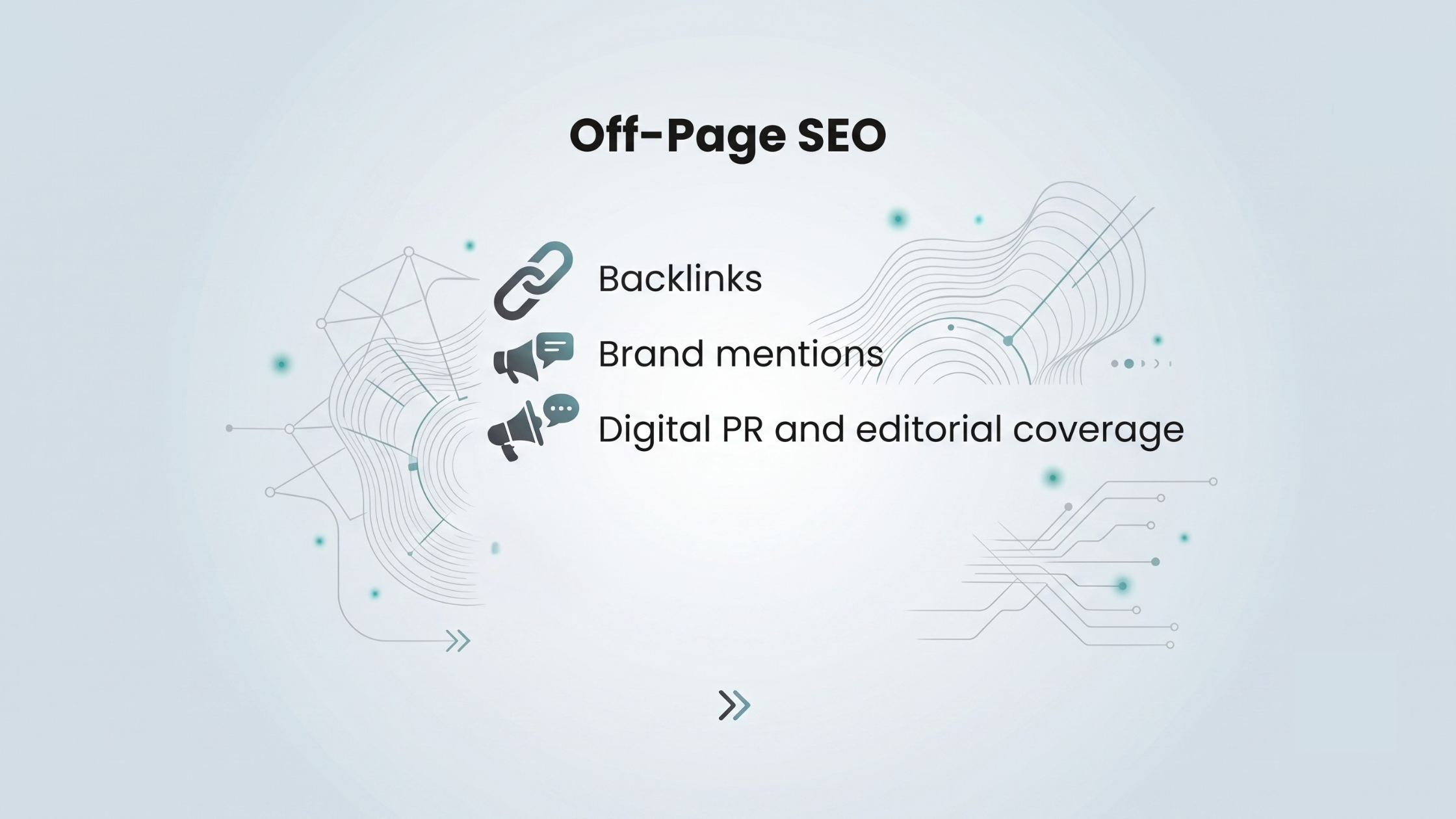
What’s Included in Off-Page SEO?
- Backlinks: one of Google’s strongest trust signals. Working on activities outside your website, such as building high-quality backlinks from reputable websites and managing your online reputation, helps improve your website’s authority, credibility, and search engine rankings.
- Brand mentions: References to your brand or website on other sites, even without a link. They help build credibility, increase brand awareness, and can positively influence SEO.
- Digital PR and editorial coverage: Getting featured in reputable publications within your industry helps build your website’s authority, increase brand visibility, and earn valuable backlinks.
Why This Matters: A new SEO blog publishes a detailed, well-structured guide on canonicalization. It’s technically clean, well-optimized, and thorough. It ranks on page 4 because the site is six months old with no backlinks. Meanwhile, Moz’s guide on the same topic, shorter and a few years old, sits on page 1. The newer article is arguably better. It loses on authority, not on content.
Full guide: Off-Page SEO Complete Guide to Off-Page Optimization
How the Three Pillars of SEO Work Together
The right order is technical, then on-page, then off-page. Off-page doesn’t matter least. It just does nothing when the technical foundation underneath it is broken.
If Google can’t crawl your pages, on-page optimization is invisible. If your pages are crawled but not understood, backlinks pointing at them do less work. If technical and on-page are solid, backlinks compound on top of something worth linking to.
In practice, most established sites don’t start from zero. A site that’s been running for two years probably has some backlinks, reasonable on-page, and a handful of unresolved technical issues. The actual starting point for most people is an audit: find what’s broken in each category, fix the technical issues first (they tend to be binary, either the page is crawlable or it isn’t), then refine on-page, then build off-page authority over time.
The thing beginners most commonly skip is the audit. They start writing content before checking whether their existing pages are even being crawled. Run site:yourdomain.com in Google first and count the results. If it’s dramatically lower than your actual page count, you have a technical problem more urgent than any content you could publish.
Final Thoughts
The common framing, “all three are important,” is technically correct and practically useless. Knowing that on-page, technical, and off-page all matter doesn’t tell you what to do on Monday morning. Every site has a specific bottleneck at any given point: Google can’t access the content, or it can access it but doesn’t understand it, or it understands it but doesn’t trust it enough to rank it above the competition.
Figure out which bottleneck you’re actually hitting, and that’s where to focus next. The pillar guides linked throughout this article go deep on each category individually.
2 thoughts on “What’s the difference between On-Page vs Off-Page & Technical SEO”
Comments are closed.