
Generative Engine Optimization (GEO) is the practice of structuring your content so that AI tools like ChatGPT, Perplexity, Google AI Overviews, and Claude cite your website in their answers.
It is one of the biggest changes in digital marketing since SEO emerged.
Traditional SEO gets your page onto Google. GEO gets your content cited inside AI-generated answers, even when the user never clicks a link.
In 2026, both matter. Most brands are only doing one.
In This guide, I covers what GEO is, how it works, how it differs from SEO, the key tactics, tools, and who should care. Each section links to a detailed cluster guide for deeper reading.
What is Generative Engine Optimization (GEO)?
GEO is the process of structuring your content and online presence so that AI-powered answer engines choose your brand as a trusted source when generating responses.
When someone asks ChatGPT “How Google Works”,
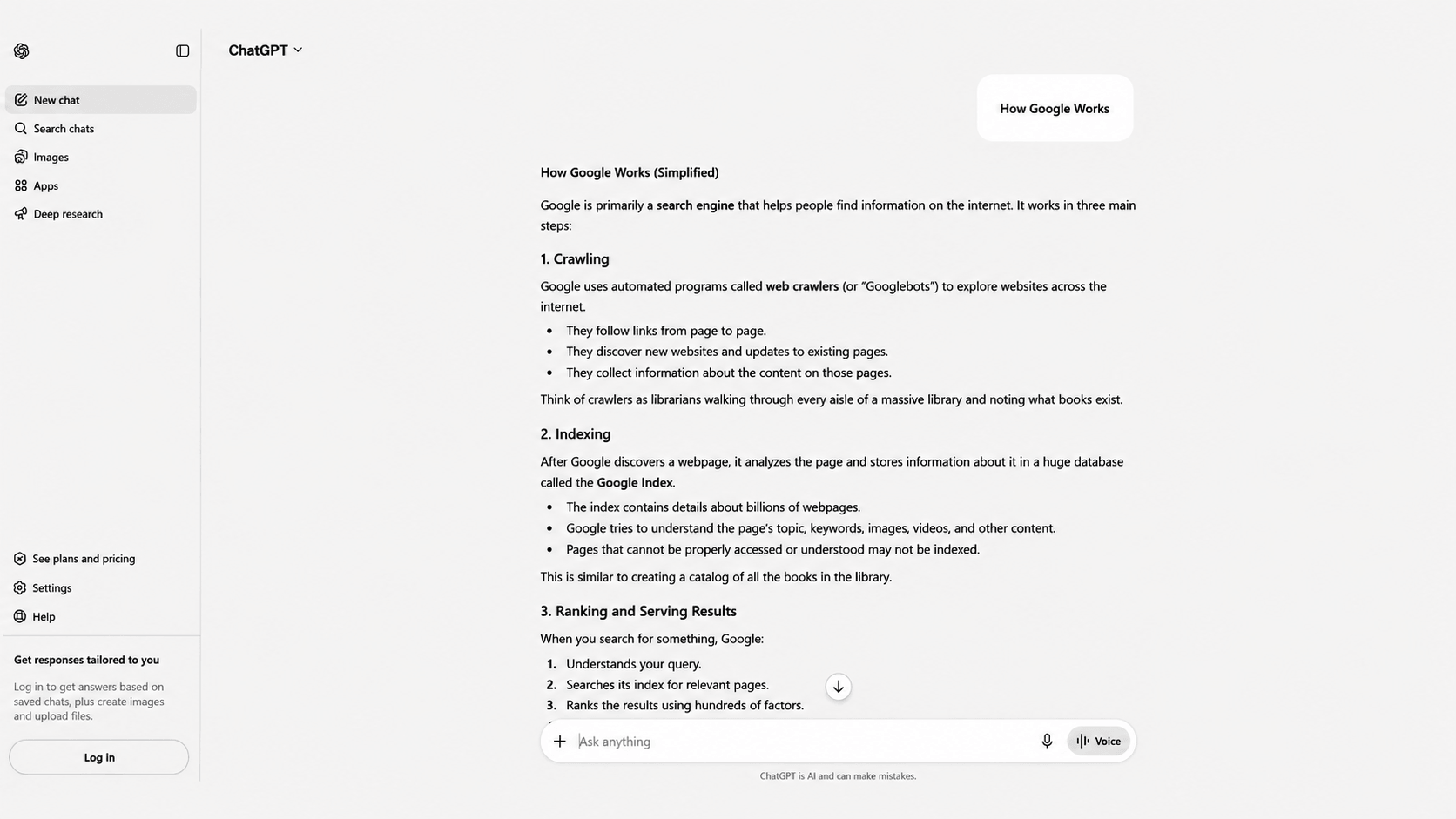
ChatGPT does not show a list of links. It writes an answer, pulling from websites it considers authoritative. GEO is how you become one of those websites.
The goal is not a ranking. It is a citation. You are not trying to appear on page one; you are trying to become the source AI engines quote when explaining a topic to a user.
You may also see GEO called AEO (Answer Engine Optimization), AI SEO, or LLMO (Large Language Model Optimization). These describe the same core goal: get AI to recommend your content.
Guide 1: What is GEO? Beginner’s Explanation
GEO vs SEO: what is the difference?
SEO and GEO are not opposites. They are layers. But they work differently and measure success differently.
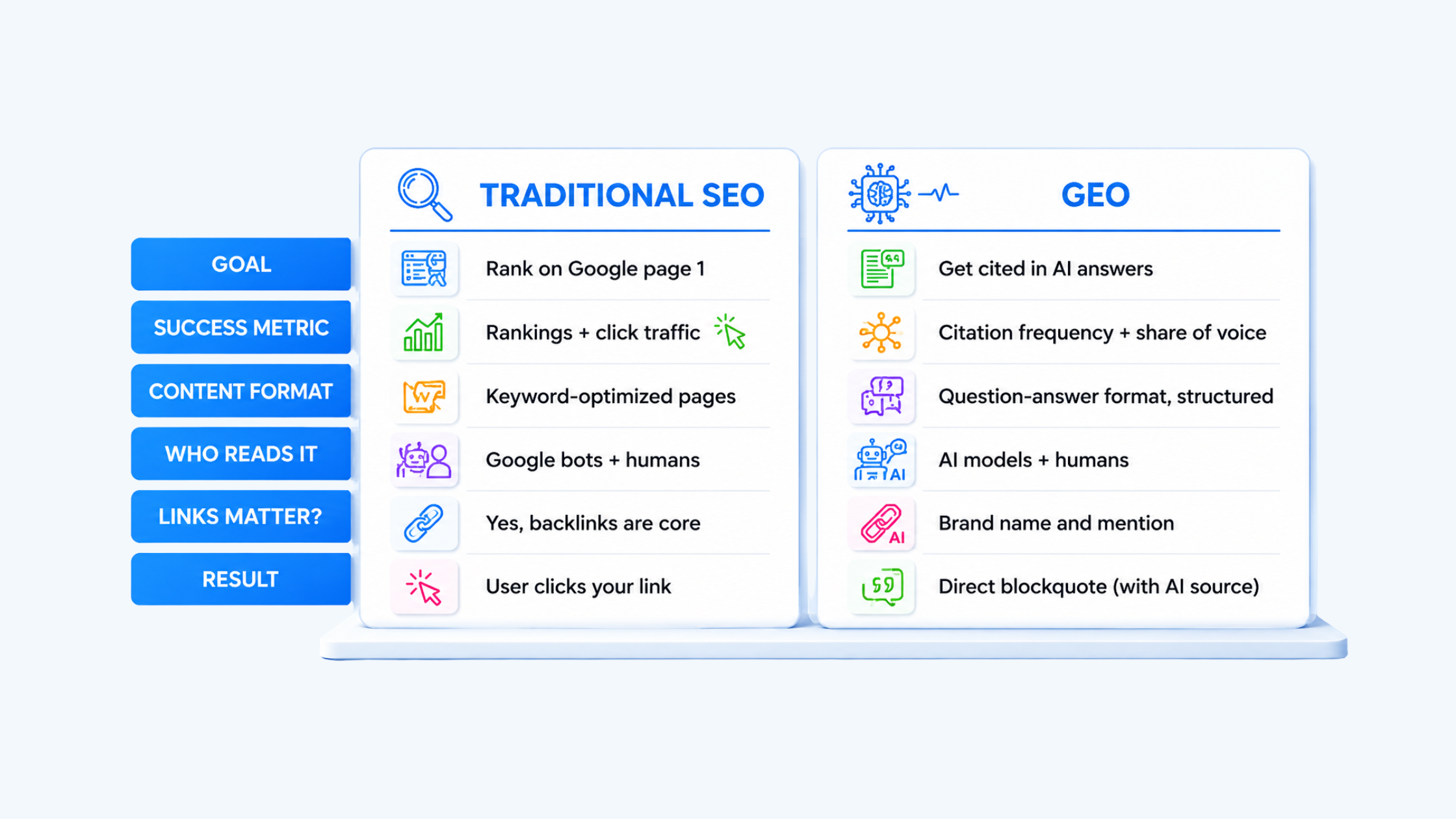
Google has provided clear guidelines in 2026 that strong SEO is essential to optimize a website for Google Search’s generative AI features. Strong SEO also benefits you with GEO, but the strategies for both are different. It’s important to lay a strong SEO foundation before implementing GEO.
Guide 2: GEO vs SEO: What is the Difference?
How Does GEO Work? (The Technology Behind It)
Most AI answer engines use a technology called RAG (Retrieval Augmented Generation). Understanding it helps you know exactly what to optimize.
What is RAG?
RAG is a three-step process:
- Step 1, Retrieval: when a user asks a question, the AI searches its knowledge base for the most relevant, authoritative sources.
- Step 2, Augmentation: the AI scores those sources on relevance, authority, recency, and how well-structured the content is.
- Step 3, Generation: the AI reads the selected sources and writes a natural-language answer, citing what it used.
Your content needs to do two things: get retrieved (be findable and authoritative) and be extractable (be structured so the AI can pull a clean answer from it).
What signals does AI look for?
- Direct answers at the start of each section, not buried in long paragraphs
- Clear headings that match how users phrase questions to AI
- Specific facts, statistics, and data that are citable
- Short paragraphs, two to three sentences per block
- Schema markup, FAQ sections, and structured data
- Author authority signals, credentials that tell AI who wrote this and why to trust them
Guide 3: What is RAG? How AI Search Engines Retrieve Content
Key GEO Concepts You Need to Know
GEO has its own vocabulary. Here are the core concepts with links to detailed guides below.
Topical authority
Publishing deep, interconnected content on a single topic so AI engines recognize your site as an expert source. Topic clusters are central to both SEO and GEO.
Guide 4: Topical Authority vs Keyword Ranking: A GEO Perspective
Entity authority
Your brand as a recognized entity, not just a website. AI engines track brands, authors, and organizations. The more your brand is mentioned, cited, and linked across the web, the stronger your entity authority becomes.
Guide 5: What is Entity Authority in GEO?
Share of voice in AI search
The percentage of AI-generated answers in your niche that mention or cite your brand. This is the primary GEO success metric, replacing traditional rankings.
Guide 6: What is Share of Voice in AI Search?
Fan-out queries
When someone asks an AI a complex question, the AI breaks it into multiple smaller sub-queries and searches each one separately. Content that answers multiple related questions in one place performs better in GEO.
Guide 7: What are Fan-Out Queries?
How to Optimize for GEO: Core Tactics
GEO implementation comes down to three areas: content structure, authority building, and technical setup.
Content structure
- Start every H2 section with a direct 40-60 word answer to the implied question
- Use headings that match how people actually phrase questions to AI
- Keep paragraphs short, two to three sentences per block
- Include original data, specific statistics, and citable facts
- Add FAQ sections at the end of every article
Guide 8: How to Optimize Content for AI Search
Guide 9: How to Write Content for Google AI Overviews
Authority building
- Get your brand mentioned on external authoritative websites
- Publish consistently on one focused topic cluster, not scattered topics
- Build author profiles with real credentials and expertise signals
- Earn backlinks and unlinked brand mentions across multiple platforms
Read full guide: How to Get Cited by ChatGPT and Perplexity
Technical setup
- Check that AI crawlers (GPTBot, PerplexityBot, ClaudeBot) are not blocked in your robots.txt
- Add schema markup for FAQs, articles, and reviews
- Ensure your content is server-side rendered, not hidden behind JavaScript
- Consider adding an llms.txt file to help AI understand your site structure
Guide 10: Schema Markup for GEO: Beginner’s Guide
Guide 11: How to Do a GEO Audit for Your Website
GEO Tools: What to Use in 2026
As of early 2026, only 16% of brands track AI search performance. The tools exist. Most brands just have not started. Here is a quick overview:
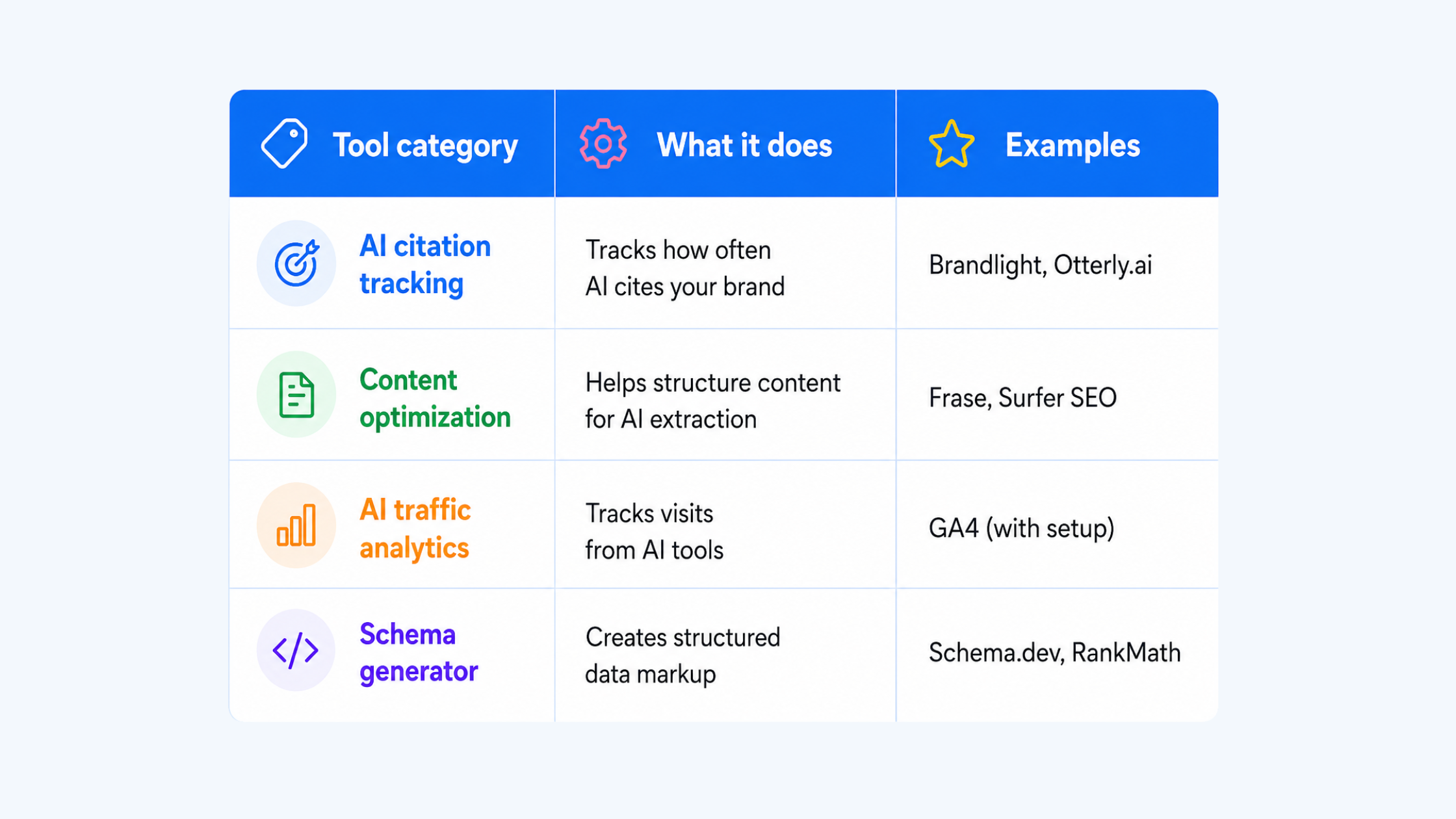
Guide 12: Best GEO Tools in 2026 (Free + Paid)
Guide 13: How to Track AI Search Traffic in GA4
Who is GEO for?
Any website that publishes content can benefit from GEO. AI engines pull from the entire web, not just top-ranked domains.
- Bloggers: How to Get AI to Cite Your Blog Content
- Small businesses: GEO for Small Businesses: Beginner Guide
- E-commerce: GEO for E-commerce: Get Your Products Recommended by AI
- Local businesses: Local Business GEO: Get Found in AI Search
Frequently asked questions
Is GEO replacing SEO?
No. GEO and SEO work together. Strong SEO, good content, clear structure, authoritative backlinks, is the foundation that makes GEO possible. GEO adds a layer on top focused on AI citation rather than click-based rankings. Google confirmed this in 2026.
How long does GEO take to show results?
For open AI engines like Perplexity and Google AI Overviews, which pull live data via RAG, content improvements can show citation results within 4 to 8 weeks. Closed models like some versions of ChatGPT update on longer training cycles, so results there take longer.
Does GEO work for small or new websites?
Yes, and this is one of the biggest opportunities right now. AI engines do not only cite the biggest websites. They cite the most relevant, clearly structured, and authoritative content on a topic. A new website that builds deep topical authority in a niche can earn AI citations faster than a large site with scattered, surface-level content.
What is the difference between GEO, AEO, and LLMO?
These are different names for the same practice. GEO (Generative Engine Optimization) is the most widely used term. AEO (Answer Engine Optimization) focuses on appearing in direct AI answers. LLMO (Large Language Model Optimization) focuses on how language models retrieve and use your content. In practice, the strategies overlap almost entirely.
Where do I start with GEO?
Start with content structure. Rewrite your existing articles so each H2 section begins with a direct 40-60 word answer. Add FAQ sections. Check your robots.txt to ensure AI crawlers are not blocked. Then build topical authority by publishing a cluster of related, deeply researched articles on your core topic.
Final thoughts
GEO is not a trend. It is the next phase of how content gets found online. Traditional search traffic is declining. AI-powered answers are growing. Brands that build GEO foundations now will be the ones AI engines cite in 2027 and 2028.
The window is open. Most websites have not started yet. You do not need a big budget or a large team. You need focused content, proper structure, and consistent topical authority.
Use the cluster guides linked throughout this article to go deeper on any topic. Start with the GEO vs SEO guide if you are new, or jump straight to the How-To section if you are ready to implement.