
Content readability is how easily readers can understand, navigate, and use the information on a page. For SEO, readable content goes beyond short sentences and simple words. It combines clear structure, relevant examples, logical flow, and direct answers to help readers find what they need. None of it is wrong, but it only takes you so far. A page can follow every rule and still be hard to follow.
Readability matters in 2026 because readers want clear, useful information. Google does not use reading level as a direct ranking factor, but readable content can improve the user experience. Clear structure and direct answers can also help both readers and search systems understand a page. Still, readability alone does not guarantee higher rankings or AI citations.
Two things decide whether a page reads easily: how it is organized and how specific it is. Sentence length matters too, but it comes third.
What Content Readability Means in SEO
Readability does not mean writing simply. A guide to canonical tags and a product page for running shoes need different vocabulary, sentence lengths, and assumptions about what the reader already knows. Readable content fits its audience and is organized so readers can find what they need without hunting.
A hard-to-read page causes two problems. Readers struggle to find the information they came for, and disorganized writing makes even the main points harder to understand. Clear structure helps with both.
Readability is also not a high Flesch-Kincaid score. These formulas estimate difficulty from factors such as sentence length and word complexity. A page can score well and still be vague, confusing, or poorly organized. Treat the score as a rough guide, not a target.
Why Content Readability Matters in 2026
Does Readability Help with AI Search Visibility?
AI-powered search systems retrieve and interpret information to generate answers. Clear explanations, descriptive headings, and well-supported claims make content easier for these systems to use. AI citations are an extra visibility opportunity, but readable writing alone does not guarantee one.
User Experience
Google does not use readability scores as direct ranking signals. Still, useful, well-organized content helps readers find answers with less effort. Focus on meeting readers’ needs rather than chasing time on page or other engagement numbers.
Voice and Mobile Search
Mobile users benefit from content that is easy to scan, and voice queries often use conversational phrasing. Put useful information near the start of each section, and match the level of detail to what the searcher wants.
What Readability Scores Get Right and Wrong
Flesch Reading Ease, Flesch-Kincaid Grade Level, and Gunning Fog are common readability formulas. They estimate difficulty using factors such as sentence length and word complexity.
As a rough guide, these scores can flag text that may be hard to read. A Flesch Reading Ease score below 30 generally means very difficult text, and a score above 80 suggests easier reading. The trap is chasing a high number by chopping every sentence short. You end up with choppy, disconnected prose that scores well and reads worse.
| What the scores catch | What the scores miss |
| Sentences that are too long | Whether the logic flows between sentences |
| Complex words | Whether the article answers the reader’s question |
| Dense paragraphs | Whether the structure matches the reader’s needs |
| Patterns associated with difficult writing | Whether the headline matches the article |
| Unnecessarily complex vocabulary | Whether examples are specific or generic |
Use scores as one signal among several. A page with a moderate score and clear structure may serve readers better than one with a high score and disconnected sentences.
Practical Readability Improvements That Work
Front-Load the Answer
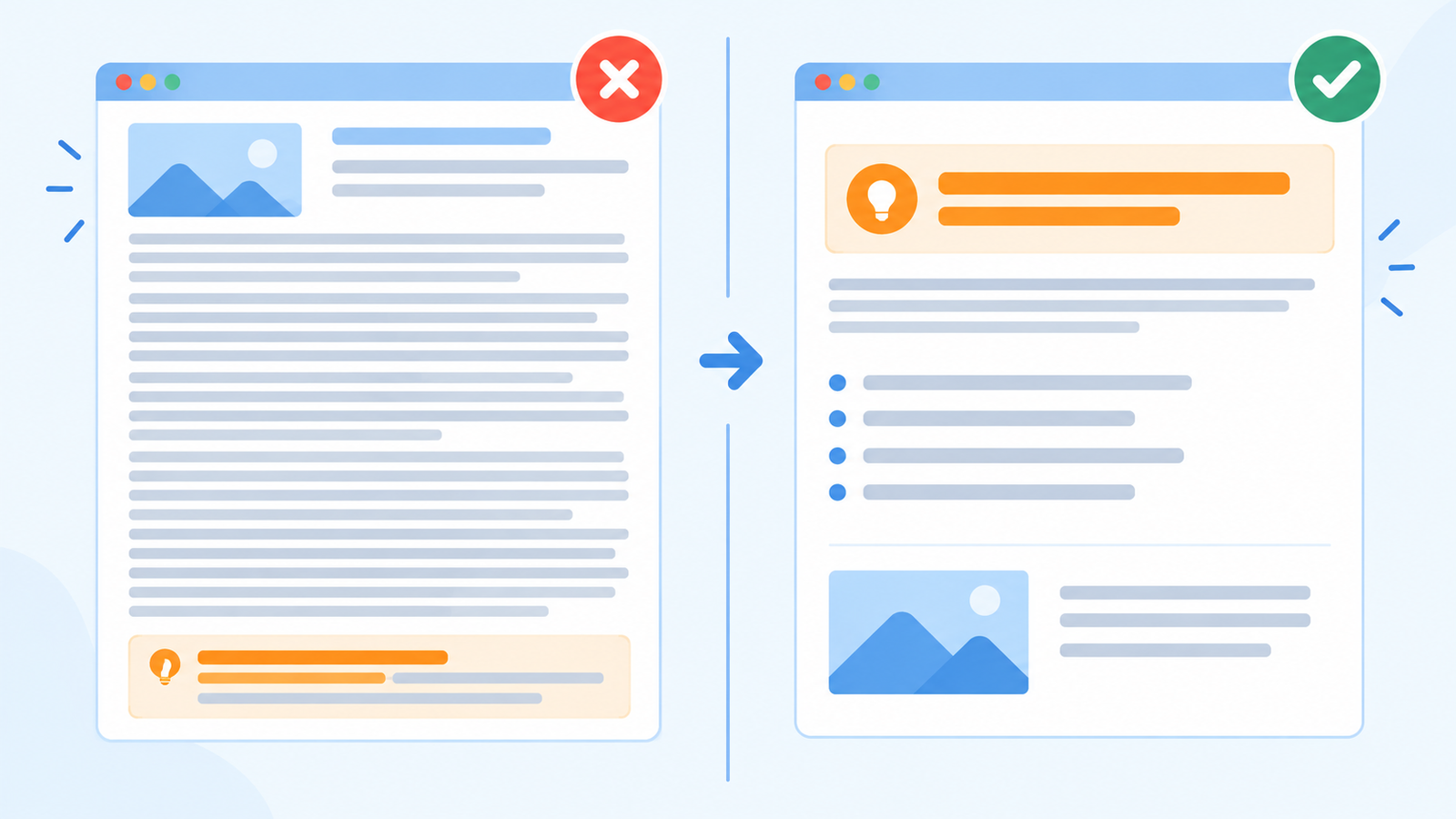
The most common readability problem in SEO content is the buried answer. Someone who searched a specific question does not want three paragraphs of background first. Open each section with its most important sentence, then support it. Readers find what they need faster, and the section is easier to follow.
Keep Paragraphs Short
Two to four sentences is a useful starting point for many types of content, not a strict rule. A long paragraph can hide the main point, while a short one keeps attention on a single idea. Clear breaks also make content easier to scan on mobile.
Vary Your Sentences
Short sentences add emphasis. They are direct. But a page made only of them feels mechanical and unnatural. Mix short, direct sentences with longer ones that develop an idea. That rhythm is easier to read than either extreme.
Use Active Voice
Passive sentences often add words and create distance between the subject and the action. “The page was crawled by Googlebot is less direct than “Googlebot crawled the page.” Passive voice is fine when the actor is unknown or unimportant, so aim for clarity rather than removing every passive sentence.
Treat Headings as Navigation
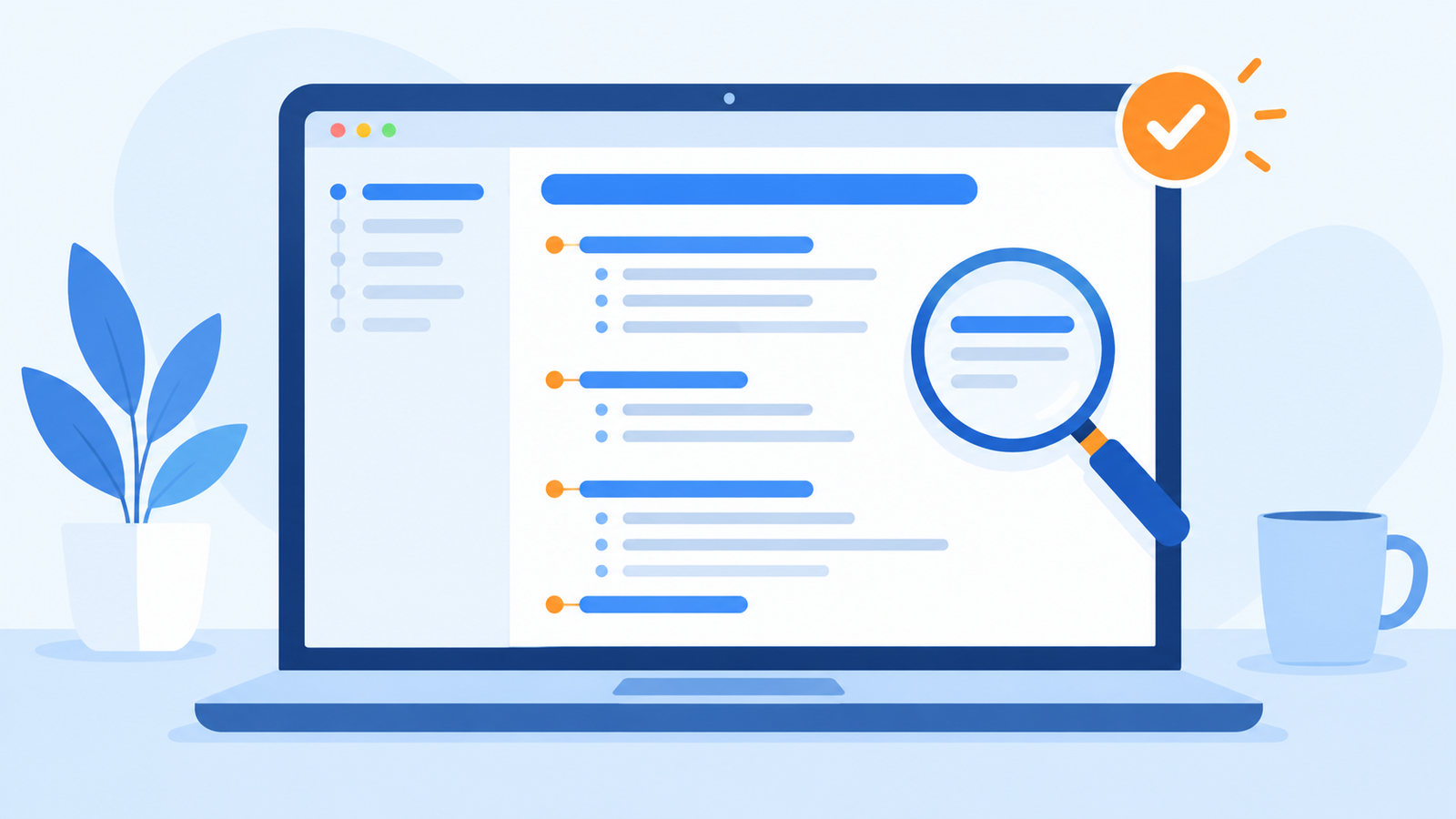
Readers scan before they read, and your H2s and H3s are what they scan. When headings match the questions in the reader’s mind, people find what they need more easily. Vague headings make a page harder to navigate.
Try this test: read only the headings of a page you wrote. Can a reader follow your argument from them alone? If the headings could fit any article on the topic, make them more specific.
Be Specific Rather Than General
Concrete details help readers understand what to do, even when the wording is not shorter. “A slow page can hurt the user experience” is easy to read. “Check your mobile loading performance and fix delays that stop visitors from reaching the main content” is easier to act on. Readability scores cannot measure how useful an example is, but readers benefit from specific guidance.
Readability and AI Search
Clear, well-structured content helps readers understand information and can make it easier for search systems to interpret. However, no writing style guarantees an AI citation.
Two habits help. First, answer the implied question near the start of each H2 section, then expand. Second, avoid burying the main takeaway in a subordinate clause or in the middle of a long paragraph. Make the answer easy to find without losing context or accuracy.
A Content Readability Checklist
Run this checklist against any page before publishing or during a revision:
- Does each section open with its most important sentence instead of background?
- Are paragraphs easy to scan? Split long ones where the ideas allow.
- Can readers follow the argument from the H2s and H3s alone?
- Do passive sentences add unnecessary length?
- Does the article introduce specific examples early enough?
- Does the writing sound natural when read aloud?
Frequently Asked Questions
Does Google Use Readability Scores as a Ranking Factor?
Not directly. Google does not use Flesch-Kincaid or similar formulas as direct ranking factors. Readability can still improve the user experience by making content easier to understand and navigate. Focus on helpful, reliable content rather than improving a formula score.
Should I Aim for a Specific Reading Grade Level?
Aim for the level your audience needs, not a universal benchmark. A cybersecurity blog for IT professionals should use technical terms. A beginner SEO guide should explain them. The useful question is whether your intended reader can follow the writing without extra effort.
Does Readability Affect AI Search Citations?
Readability may help AI-powered systems interpret and retrieve useful information, but it does not guarantee citations. Clear structure, relevant answers, accurate information, and enough context make content more useful to readers, and that is the safest foundation.
What Is the Fastest Readability Fix for an Existing Page?
Find the three longest paragraphs on the page and review them. Split any paragraph that holds more than one idea, cut unnecessary words, and move the main point to the front. This can improve readability without a full rewrite.
Final Thoughts
Content readability helps readers understand your page. Front-loaded answers, clear paragraphs, specific examples, and descriptive headings make content easier to navigate and use.
A tool can give a high score to an article that buries its conclusion or offers generic advice. A lower score on a page with clear structure and useful information may serve readers better. Write for readers first, and treat SEO and AI visibility as outcomes that depend on content quality and other factors.